



New school year, same old problems
classes-2024
CEBU CITY, Philippines – Despite a slight increase in the prices of school supplies, Nick Dan Rivera is eager to return to school.
The 17-year-old from Liloan National High School is entering his final year of Senior High School, holding on to his dream of becoming an engineer and helping his family by securing a stable job.
“Nag-eskwela ko para makatabang ko sa akong pamilya. Karong panahona, lisod gyud mangita og trabaho,” Rivera said.
(I study so I can help my family. These days, it’s really hard to find a job.)
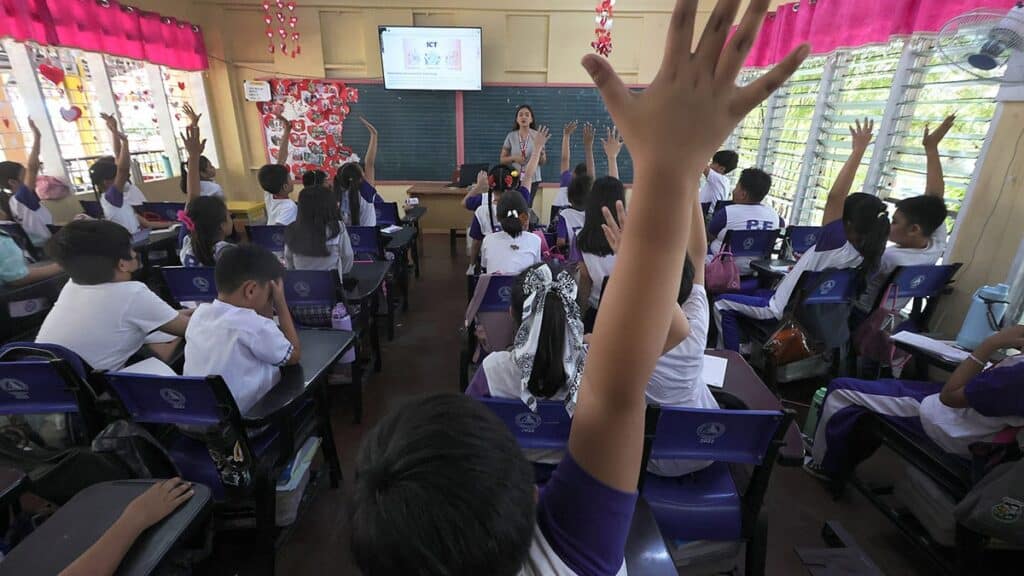
Rivera is one of more than a million students expected to head back to school in Central Visayas today, June 16—the official start of classes for the 2025–2026 academic year.
This year marks several changes for the region.
From a previous 2 million, enrollment in Central Visayas has dropped to 1.5 million, following the formal inclusion of Siquijor and Negros Oriental into the newly reestablished Negros Island Region (NIR).
Now, only Cebu and Bohol remain under the administrative jurisdiction of the Department of Education in Central Visayas (DepEd-7).
The country has also reverted to the old school calendar, with classes beginning in June instead of September.
But while the dates and demographics have shifted, age-old challenges remain—particularly the shortage of classrooms and teachers.
Persistent Shortages
According to DepEd-7 director Dr. Salustiano Jimenez, Central Visayas still needs between 3,000 and 5,000 classrooms, as well as at least 1,000 more teachers, to meet the ideal student-teacher ratio.
There is no universally fixed ratio, as it varies by level and context, but education experts recommend that each elementary or high school teacher handle no more than 30 students for effective learning.
That’s not the case for large schools like Liloan National High School, where some teachers manage classes with up to 50 students.
“I’ve gotten used to it,” said Hermelyn Gingone, 29, a Grade 9 teacher at the school.
“We just have to manage. The bigger challenge is really classroom discipline, because a student’s behavior can greatly affect their focus,” she said.
Proposed Solutions
To address these issues, DepEd-7 has laid out several strategic plans, including a digital profiling system for all schools to better assess and streamline their needs.
“We’ve started profiling each school in the region, and to improve efficiency, we are digitizing the entire process,” Jimenez said.
DepEd is also working with local government units (LGUs) and the private sector to accelerate teacher hiring. In some less-populated towns, teachers are now being assigned to multiple grade levels to help bridge staffing gaps.
Back to June
Despite these challenges, Jimenez said preparations for the new school year went smoothly.
He credited this to the strong community turnout for this year’s Brigada Eskwela and noted that many stakeholders welcomed the return to a June school opening.
“We received very positive feedback from parents and the community. Many were glad about the change, and we hope that next year, we can officially resume opening classes on the first Monday of June,” he added.
RELATED STORIES
DepEd 7: Cebu schools face classroom shortages, damaged facilities
DepEd says school year 2025-2026 will start June 16
Disclaimer: The comments uploaded on this site do not necessarily represent or reflect the views of management and owner of Cebudailynews. We reserve the right to exclude comments that we deem to be inconsistent with our editorial standards.
