
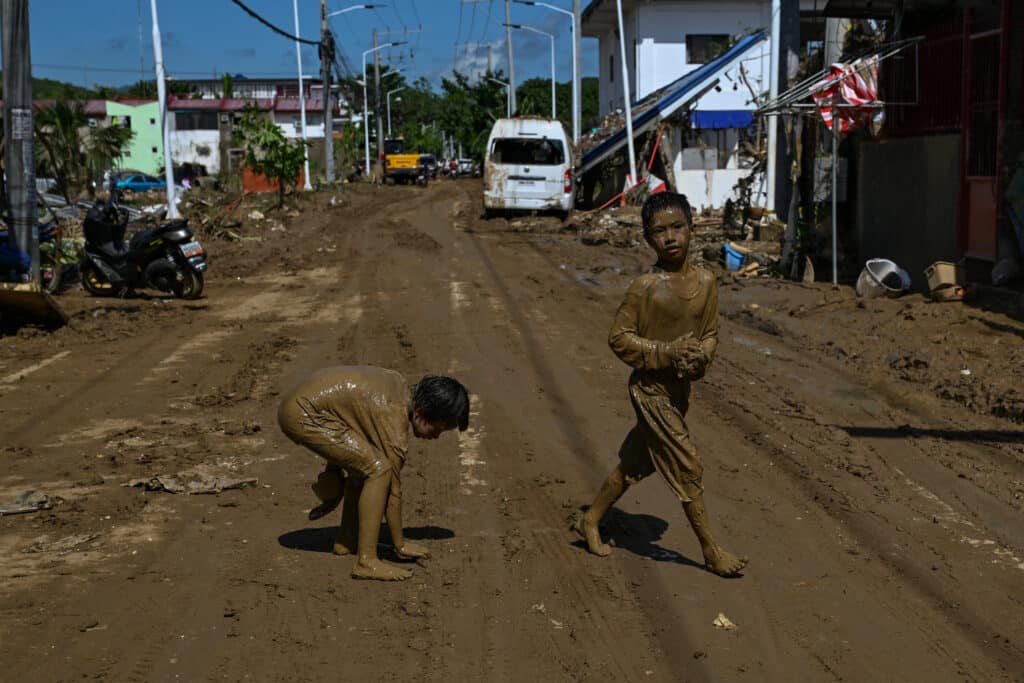
CEBU CITY, Philippines – The catastrophic floodings in Metro Cebu, triggered by Typhoon Tino (international name: Kalmaegi), could have been prevented if the master drainage plan had been established.
To prevent similar tragedies from happening in the future, Cebu Vice Gov. Glenn Anthony Soco pushed for the revival of the Metro Cebu Flood and Drainage System Master Plan.
“Each flood means lost income for workers who can’t report to work, damage to small businesses and families forced to start over. It’s painful to see- because we know better and yet we didn’t do better,” Soco said.
‘Reactionary’ disaster response
The vice governor made this call in a privilege speech he delivered during the Provincial Board’s regular session on Monday, November 10.
Speaking before the Cebu Provincial Board, he warned that lives, livelihoods, and entire communities will continue to be placed at risk unless the government returns to a “real, long-term solution” and stops relying on “reactionary” disaster response.
“What hurts most is knowing — this could have been avoided,” he said.
The widespread flooding that inundated multiple cities and towns after Tino had been “a nightmare” that Cebu should never have had to endure, the vice governor added.
Ignored
The Metro Cebu Flood and Drainage System Master Plan was first introduced in 2013.
Experts from the Department of Public Works and Highways (DPWH) and the Japan International Cooperation Agency (JICA) came up with the flooding mitigation plan to manage rainfall runoff from Danao City in the north to Carcar City in the south.
Surface runoff water from heavy rainfall had been cited as the primary contributor to severe flooding in the metro.
“I found out about this plan as early as 2017,” said Soco.
At that time, he served as then-president of the Mandaue Chamber of Commerce and Industry and later as chair of the Regional Development Council’s infrastructure committee.
“When I became chairman… I made sure the plan was endorsed and approved — with national funding,” he said.
The master plan initially received P700 million in 2018 and P1.2 billion in 2019, funding used to improve major river systems in Metro Cebu.
But Soco lamented that national support abruptly stalled.
“After that, nothing. Funding stopped and the plan was shelved,” he said. “To be blunt about it: we abandoned the plan and the people paid the price.”
Wrong flood control
Soco welcomed DPWH Secretary Vince Dizon’s indication — during a Nov. 8 post-typhoon briefing with President Ferdinand Marcos Jr. — that the national government will revisit the master plan.
At the same time, he blasted “scattered, substandard and misaligned drainage and flood control works” that failed to protect the communities they intended to protect.
“We can’t keep rebuilding what was built wrong… We can’t keep fixing symptoms while ignoring the cause,” Soco pointed out.
Governance culture
Otherwise, Cebu would be stuck in a governance culture reliant on calamity declarations, relief distribution, and photo opportunities rather than prevention.
“Our people don’t need photo ops. They need results. Cebuanos are tired of corruption. I’m tired of corruption,” said Soco.
The vice governor ended by urging collective resolve to implement lasting, honest and science-backed solutions.
“Let’s move past the empty comfort of the word resiliency… Our people are not just resilient — they are tired, they are frustrated, and they deserve better,” Soco said.