



Does the Sierra Madre really stop typhoons?
Here’s what science says
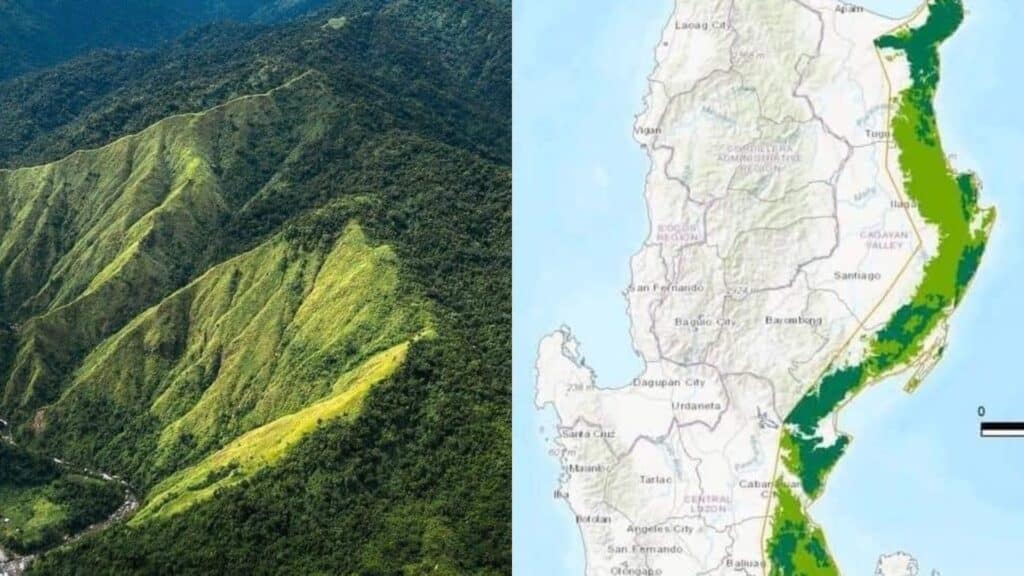
CEBU, Philippines — For years, Filipinos have called the Sierra Madre the country’s “great wall” — a mighty shield that protects Luzon from raging typhoons.
But as Typhoon Uwan (international name Fung-wong) battered the region over the weekend, the question resurfaced online: Does the Sierra Madre really stop typhoons?
READ: UWAN: Live updates
The Department of Science and Technology (DOST) clarified on Monday, November 10, that while the Sierra Madre Mountain Range helps weaken strong winds, it “cannot fully protect” Luzon from the destructive impact of tropical cyclones.
“Maaaring sabihing nakatutulong ang Sierra Madre bilang panangga sa mga bagyo sa Luzon sapagkat may kakayahan itong bahagyang pahinain o bagalan ang lakas ng hanging dala ng bagyo,” DOST said in a post on its official Facebook page.
(It can be said that the Sierra Madre can help as a wall against typhoons in Luzon because it has the capability to weaken or slow down the strength of the wind brought by a typhoon.)
“Gayunman, hindi ito nagbibigay ng ganap na proteksyon laban sa matitinding epekto ng mga ito.”
(However, it does not really give full protection against the strong effects of the typhoons.)
What the science says
The DOST cited a 2023 study published in the Philippine Journal of Science by Dr. Gerry Bagtasa of the University of the Philippines Diliman and Dr. Bernard Alan Racoma of the University of the Philippines Los Baños.
Using a numerical weather prediction model that simulated 45 typhoons that struck Luzon between 2000 and 2020, the researchers analyzed the effects of both the Sierra Madre and the Cordillera Mountain Range on tropical cyclone behavior.
READ: Sierra Madre: CBCP exec says people should protect, not just thank it
Their findings show that while mountain ranges indeed disrupt typhoons, the Sierra Madre does not immediately or significantly weaken storms upon landfall.
Among their key conclusions:
Typhoon strength typically does not drop drastically within the first six hours after landfall, even with the presence of mountain ranges.
The Cordillera Mountain Range, further inland, has a stronger impact on reducing wind speed than the Sierra Madre.
The Sierra Madre, however, helps reduce rainfall in the western parts of Luzon, including Metro Manila, by as much as 23 to 55 percent.
In Cagayan Valley, the range helps lessen both wind and rainfall, serving as an effective natural barrier in that region.
They emphasized the need to protect the Sierra Madre from deforestation, mining, and other destructive activities, warning that continued degradation weakens its natural buffering capacity.
A call to protect the country’s ‘first line of defense’
Stretching 540 kilometers from Cagayan in the north to Quezon Province in the southeast, the Sierra Madre is the longest mountain range in the Philippines. It is home to 3,500 plant species, of which 58 percent are endemic, and is a crucial carbon sink that helps stabilize climate and weather patterns.
The Climate Change Commission (CCC) has called it Luzon’s “natural fortress” and the Philippines’ first line of defense against climate-induced disasters. But the agency warned that its role is being “compromised by deforestation and illegal mining.”
“The Sierra Madre slows down and deflects strong winds before they reach inland areas,” the CCC said. “Protecting it is protecting lives.”
Presidential Proclamation No. 413 designates September 26 of every year as Save Sierra Madre Day, in remembrance of Typhoon Ondoy (Ketsana) in 2009, which killed hundreds after torrential rains submerged Metro Manila.
Sierra Madre goes viral amid Typhoon Uwan
The renewed discussion over Sierra Madre’s role came as Super Typhoon Uwan swept across northern Luzon, prompting widespread damage and power outages.
According to the Philippine Atmospheric, Geophysical and Astronomical Services Administration (Pagasa), Uwan weakened into a typhoon early Monday, November 10, after crossing the mountain ranges of northern Luzon, including the Sierra Madre.
As of 1:00 a.m., Uwan was located over Bagulin, La Union, packing maximum sustained winds of 165 kilometers per hour (kph) near the center and gustiness of up to 275 kph, Pagasa said.
“If you notice, the gustiness is a bit strong as it hits the terrain or the mountains of northern Luzon,” said Pagasa weather specialist Obet Badrina in a 2:00 a.m. update.
“Possibly, in our next 5:00 a.m. update, Uwan will already be in the West Philippine Sea.”
Pagasa said tropical cyclones reach their greatest intensity over warm seas but begin to weaken once they interact with land, as friction and terrain disrupt the storm’s circulation.
Uwan exits PAR but continues to affect northern Luzon
As of 5:00 a.m. Tuesday, November 11, Typhoon Uwan (Fung-wong) has moved northward outside the Philippine Area of Responsibility (PAR), according to the Philippine Atmospheric, Geophysical and Astronomical Services Administration (Pagasa).
In its Tropical Cyclone Bulletin No. 21, Pagasa said Uwan maintained its strength while moving northward at 15 kilometers per hour (kph). Its center was estimated 365 kilometers west of Calayan, Cagayan, already outside PAR.
Uwan packed maximum sustained winds of 120 kph near the center and gustiness of up to 150 kph, with strong to typhoon-force winds extending up to 750 kilometers from the center.
Tropical Cyclone Wind Signal (TCWS) No. 2 remains hoisted over Batanes, Cagayan including Babuyan Islands, Apayao, Abra, Kalinga, Ilocos Norte, Ilocos Sur, and parts of Mountain Province, Benguet, and La Union.
Meanwhile, Signal No. 1 is still up over Isabela, Quirino, Nueva Vizcaya, Pangasinan, Zambales, Metro Manila, and nearby provinces.
Pagasa warned that strong to gale-force winds and very rough to high seas, with waves reaching up to 8 meters, are expected over the seaboards of Northern and Central Luzon, prompting authorities to advise all sea vessels to stay in port.
Although Uwan is now outside PAR, the weather bureau said gusty conditions may still be felt over most parts of Luzon and the Western Visayas. The typhoon is forecast to weaken into a severe tropical storm as it moves toward western Taiwan in the next 24 hours.
Storm chaser weighs in
American storm chaser Josh Morgerman, who is in the Philippines documenting Uwan, also joined the online discussion, correcting viral misconceptions about the mountain range.
“Many folks are posting misinformation about the Sierra Madre Mountains in the Philippines,” Morgerman wrote on Facebook. “Let me set the record straight: The Sierra Madre chain weakens typhoons after they make landfall on the east coast of Luzon. These mountains do not protect the east coast of Luzon, which regularly experiences some of the strongest tropical cyclone impacts in the world.”
Other mountain barriers of Luzon
While the Sierra Madre dominates the eastern corridor, Luzon is flanked by two other significant mountain ranges: the Cordillera Range and the Caraballo Mountains.
The Cordillera Range, 320 kilometers long, stretches across the Cordillera Administrative Region, including Abra, Benguet, Kalinga, Ifugao, Apayao, and Mountain Province—and extends into parts of Ilocos and Nueva Vizcaya.
The Caraballo Mountains, a 54-kilometer chain, serve as a natural bridge between the Cordillera and Sierra Madre ranges.
Together, these landforms shape the country’s weather, water flow, and resilience against natural disasters.
The bottom line
The Sierra Madre does not stop typhoons, but it does help soften their blows. Scientists, weather experts, and environmental advocates agree that its real power lies not in blocking storms completely, but in mitigating their impacts and preserving ecological balance.
And as stronger and more frequent typhoons continue to threaten the Philippines, the message from experts remains clear: Protect the mountains. Protect the forests. Protect the people.
Disclaimer: The comments uploaded on this site do not necessarily represent or reflect the views of management and owner of Cebudailynews. We reserve the right to exclude comments that we deem to be inconsistent with our editorial standards.
