



Did You Know? The Santo Niño hymn “Batobalani sa Gugma” has multiple versions
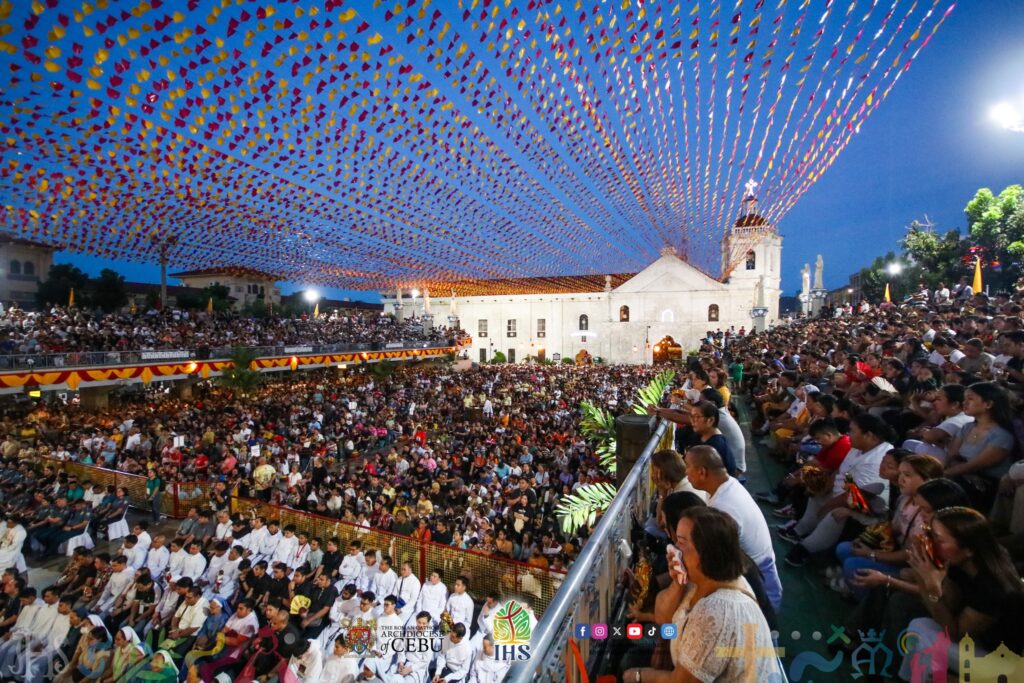
CEBU CITY, Philippines — For centuries, the devotion to the Santo Niño de Cebu has been expressed not only in processions, prayers, and rituals, but also through music.
Among these expressions, the “Gozos al Señor Sto. Niño,” popularly known as “Batobalani sa Gugma,” stands out as one of the most enduring and beloved hymns in Cebuano Catholic tradition.
According to Rev. Fr. Ric Anthony Reyes, archivist of the Basilica Minore del Sto. Niño de Cebu, the Gozos has a rich history that illustrates not only religious devotion but also the linguistic and cultural heritage of the Philippines.
Read also: FACES OF CEBU: Jacky and Leticia Avenido, Santo Niño’s tailors
According to Fr. Reyes, knowledge of the Gozos largely comes from the earliest Cebuano novenario, printed in Manila at the Seminario Conciliar y Real de San Carlos by Agustin de la Rosa y Balagtas, which provides a window into the hymn’s origins and evolution.
“Hence, the Gozos has been in Cebuano in its original form,” Fr. Reyes wrote.
Origins: Earliest Cebuano Gozos traced to 1788
The term Gozos refers to a type of devotional hymn, often poetic, rhymed, and metered, designed to accompany prayers and novenas.
The earliest Cebuano Gozos, as documented in the 1788 Novenario, was elaborate in style and rich in literary devices, a reflection of the sophisticated devotional poetry of the time.
Subsequent Cebuano editions, published in 1858, 1888, and 1908, retained much of the original text, demonstrating the stability of the hymn’s Cebuano form over more than a century.
The Gozos was also translated into other languages.
A Spanish version appeared in an 1809 edition of the Novenario Dedicada al Santissimo Nombre de Jesus, where the first line, “Batobalani sa Gugma,” was rendered as “Iman Dulce de mi Amor”, roughly translated as “Sweet Magnet of My Love.”
Unlike the Hiligaynon translation, the Spanish version was not a literal translation, suggesting that the hymn’s devotional sentiment could be adapted across languages.
The Hiligaynon (Ilonggo) translation, titled “Batobalani sang Gugma,” first appeared in 1881 in a novena authored by Don Anselmo Avanceña, a diocesan priest from Arevalo, Iloilo.
Avanceña, educated at the Seminario de San Carlos in Cebu and previously assigned to Cebu Cathedral, translated the Cebuano text literally for Ilonggo-speaking faithful, ensuring that the devotional content remained faithful to the original while making it accessible to a broader audience.
From poetic masterpiece to modern hymn
Fr. Reyes explained that the modern version of the Gozos, widely sung in the Basilica Minore del Sto. Niño de Cebu today, began to be simplified around the 1980s.
“The old Gozos was sung in different tunes as it is evident in the surviving old folks in some areas, especially in Dalaguete and Boljoon,” he said.
The simplification made the hymn more accessible, but each strophe preserves the thought of the older poetic version.
This modernization involved streamlining the lyrics, removing some of the complex rhymes and meters, and establishing a single standard tune for congregational singing.
Despite these changes, the hymn’s devotional essence remains intact, continuing to serve as a spiritual bridge connecting contemporary faithful with centuries of tradition.
Full Lyrics of the Gozos
Older Version (Cebuano)
GOZOS
Bato balani sa gugma
sa daan tao palangga

Canamo malooy ca unta nga canimo nangilaba.

Ang sa sugbúng pagcadonggo
sa mga cachilang tao,
dinhi hinpalgan icao
sa una canilang sondalo,
cania icao napaquita,
guican lamang sa mong gugma.

Canamo malooy ca unta, etc.

Ang balay nga hinpalgan
sa imo nga catahuman
nahimo nga catilingban
sa mga taong daghanan,
ang ngatanan naningala
cay gionhanan mo man sila.

Canamo malooy ca unta, etc.

Guisingba leao ug guilodhan
ni Legaspi nga ponoan.
cay icao niya ang hingquit-an
sa iyang paghidalagan,
sa madagaang nga gugma
nagamatuod nga Dios nga matuod.

Canamo malooy ca unto, etc.

Cadtong mga taong daghan
ang gugma nila guiasdang
sa pagbuhat ug simbahan
sa canimo nga hipalgan
nga guipanaghalad nila
canimo Dios sa gugma.

Canamo malooy ca unta, etc.

Ang imong mga catahuman
sa mga calag calipayan,
sa among saquit ingon ug tambal
ug sa among changul manggad
sa ngatanan quinahanglan
icao ang among dalangpan.

Canamo malooy ca unta, ete.

Icao lamang ang ampoon
sa mga daang sugbuanon
nga canimo nanagbaton
con naay quinahanglanon,
busa guinganian ca nila
alampoon bahala.

Canamo malooy ca unta, etc.

Cun olan ang pangayoon
ug imong pagadugayon,
dadan-on ca sa baybayon
ug sa dagat pasalomon
ug dayon nila macuha
ang olan nga guitinguha.

Canamo maloy ca unto, ete.

Icao gayud ang tuburan
ning lonion catingalahan,
busa icao quitoohan
Current Version (Modern Cebuano)
Bato Balani sa Gugma (Gozos)

Bato balani sa gugma,
sa daan tawo palangga.

KANAMO MALOOY KA UNTA
NGA KANIMO NANGILABA

Dinhi sa syudad sa Sugbo
ang matahum mong larawan
sa unang mga misyonero
sa usang balay hipalgan.
Kanila ikaw nagpakita
gikan da sa imong gugma.

KANAMO MALOOY KA UNTA
NGA KANIMO NANGILABA

Giludhan ikaw gisimba
niadtong mga kaparian.
Sa tanan nga katawhan
sa mga punoan nila
kay sa pagtan-aw kanimo
kristyano sila nahimo.

KANAMO MALOOY KA UNTA
NGA KANIMO NANGILABA

Ang simbahan gipatindog
niadtong mga tawhana
aron ang larawan nimo
dunay usang puloy-anan,
ug didto gihangyo nila
nga kaloy-an nimo sila.

KANAMO MALOOY KA UNTA
NGA KANIMO NANGILABA

Nangayo kami kanimo
nga ang matahom mong larawan
sa sulod sa kalag namo
makahimog puloy-anan
kay sa tanang kinahanglan
ikaw ang among dalangpan.

KANAMO MALOOY KA UNTA
NGA KANIMO NANGILABA
Cultural and spiritual significance
Fr. Reyes emphasized that the Gozos is more than a hymn, it is a living tradition that continues to anchor Cebuano devotion to the Santo Niño.
Its evolution, from the elaborate 18th-century poetic form to the modern simplified version, demonstrates how faith practices can adapt while maintaining their historical and linguistic integrity.
The Gozos connects modern-day devotees with centuries of faith in the Santo Niño.
Singing it is not just a ritual, it is a way of keeping Cebuano devotional heritage alive.
As devotees raise their voices in both the original and modern versions of “Batobalani sa Gugma,” they are participating in a tradition that has endured for more than two centuries, reflecting the rich intersection of faith and language that defines Cebuano Catholicism.
Disclaimer: The comments uploaded on this site do not necessarily represent or reflect the views of management and owner of Cebudailynews. We reserve the right to exclude comments that we deem to be inconsistent with our editorial standards.
