



EV shift could strain Cebu’s power grid, transport regulator warns
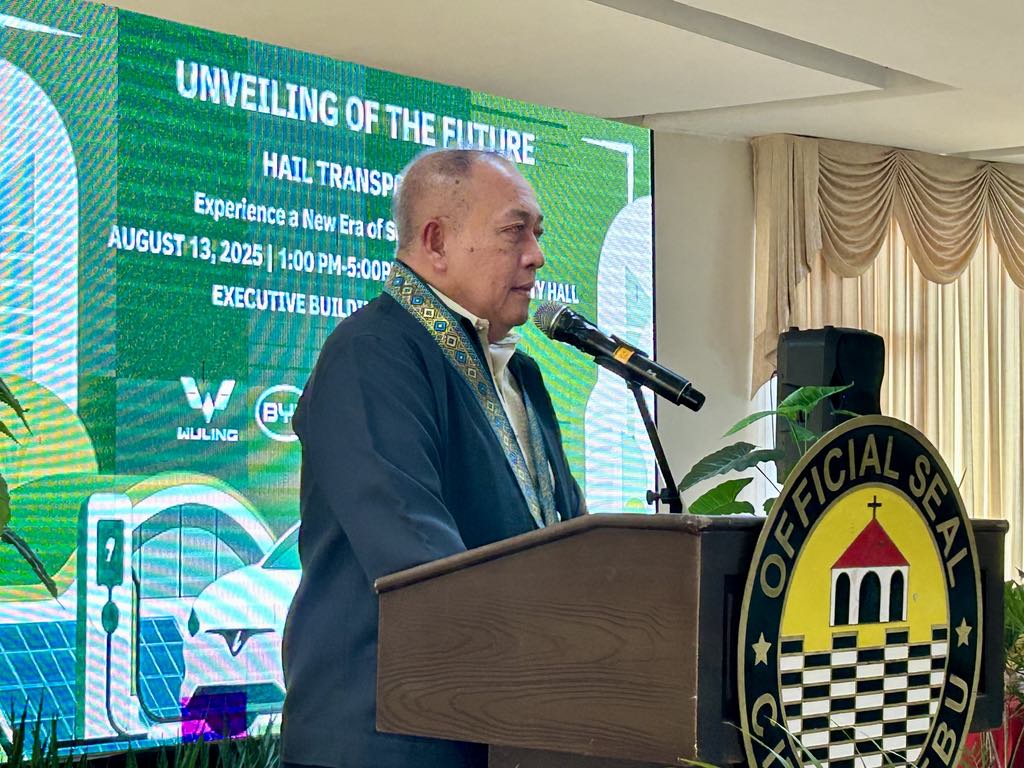
Eduardo Montealto Jr, the regional director of the Land Transportation Franchising and Regulatory Board (LTFRB) Central Visayas. | CDN Photo/ Pia Piquero
CEBU CITY, Philippines — The push to put more electric vehicles (EVs) on Cebu’s roads could help clear the air, but it may also put unprecedented pressure on the province’s power supply if infrastructure and generation capacity fail to keep pace.
Eduardo Montealto Jr, regional director of the Land Transportation Franchising and Regulatory Board in Central Visayas (LTFRB-7), said on Wednesday, August 13, that while EV numbers were still “negligible” today, the shift to electric-powered public transport would significantly raise demand on the grid in the years ahead.
READ: 10 electric vehicles you can buy in Cebu to drive a greener future
“Kung mag-electric na tanan, kinahanglan dunay mag-compensate sa requirement pud,” Montealto said.
(If all will go electric, then there should something that will compensate for the requirement.)
Central Visayas sourced most of its electricity from Leyte, but with EV use slowly gaining traction, Montealto stressed that more generation capacity would be needed.
READ: Cebu City: Archival eyes between P9B and P11B ‘doable’ budget for 2026
Two companies are already pursuing additional power plants in the region, but he warned that this may not be enough if adoption accelerates.
At present, Cebu has eight accredited ride-hailing operators, including Hail Transport Inc., a new transport network company operating a fully electric fleet.
Hail, which recently launched in Cebu, aims to position itself as a sustainable alternative in the ride-hailing market by using only electric vehicles. Its entry, alongside falling EV prices driven by competition and direct imports from China, is making the shift to electric-powered public transport increasingly viable.
“Nindot ni nga daghan na kaayo, pariha ani, nibarato man ilaha… maayo madaghan pa gyud aron ma-encourage jud tanan og palit,” Montealto said.
(It is nice because there are now more, like these, they have become cheaper…it is nice to have more so that more would be encouraged to buy.)
READ: New incentives program for electric vehicles seen ‘more inclusive’
Montealto, an engineer, emphasized that the charging network must expand alongside EV adoption.“Kinahanglan ni unahon pud nila ang charging stations. Naa man kunoy ratio sa charging stations, then, i-increase nato ang atong power supply dinhi,” he said.
(They need to first put up charging stations. There is a ratio on charging stations, then, we will increase our power supply here.)
While a single EV consumes roughly the same electricity as a household, simultaneous charging could overload the system, he noted. Having standby capacity is critical.
“Kinahanglan gyud ta adunay back-up, kinahanglan gyud adunay pakapin ba,” he added.
(We really need to have a back-up, we really need that there is something more.)
If one power plant goes offline, another should be ready to take over to avoid outages.
Montealto acknowledged that the environmental benefits were clear.
“Atong pollution siyempre mawa, mugamay gyud ang atong pollution,” he said.
(Our pollution, of course, would be gone, our pollution would be lessened.)
In Metro Manila, electric public utility vehicles are now a common sight. For Cebu and the rest of Central Visayas, Montealto said the early arrival of EV operators would be an opportunity to prepare the transport and energy sectors for an inevitable transition.
Cebu’s EV push is not new. In September 2024, then-acting Cebu City mayor Raymond Alvin Garcia announced that at least 10 percent of the city’s planned green bus fleet would be electric, citing lower operating costs and reduced emissions.
Mayor Nestor Archival Sr., who took office this year, has also placed EV integration among his administration’s 2026 budget priorities. His plan includes city-owned EVs, solar charging stations, and solar-powered streetlights to cut costs and reduce dependence on fossil fuels.
Nationally, corporations such as Meralco and the Ayala Group have rolled out EV fleets and charging hubs under their sustainability programs.
The government has also begun offering incentives to make EVs more affordable, although high prices and limited charging infrastructure remain key barriers.
Disclaimer: The comments uploaded on this site do not necessarily represent or reflect the views of management and owner of Cebudailynews. We reserve the right to exclude comments that we deem to be inconsistent with our editorial standards.
