


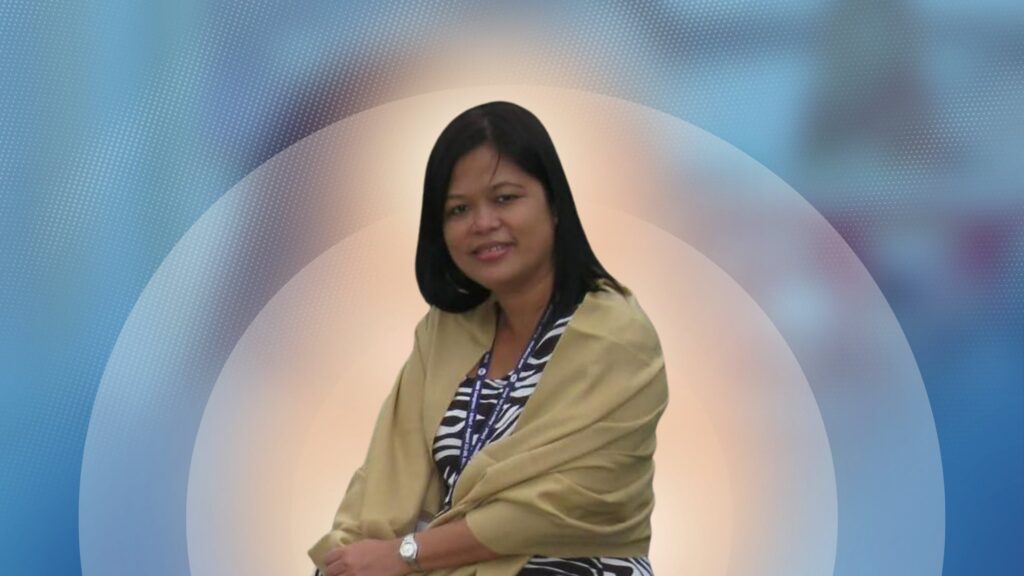
CEBU CITY, Philippines — Days before the elections in the summer of 2010, Delilah Labajo, leader of a church-based Cebu poll watchdog group stood beside herself on Santa Fe, Bantayan Island, wondering whether her fellow volunteers would deliver.
For a long time, the island, a traveler’s paradise, had a reputation for violent politics. It often made the Commission on Elections’ list of election hotspots.
READ: FACES OF CEBU: Krizcia May Ombos tops LET, crafts content
“It seemed like we were in a war zone,” Labajo said. “I saw police patrols and military personnel everywhere.”
“Will you carry on?” Labajo’s father had asked her amid the unsettling events. In reply, expressing her desire to persevere, she quoted then Fr. Ruben Labajo, who then served on the island: “Walang iwanan (No one gets left behind).” Her parents, who always sent her off to volunteer work with their blessing, remained supportive.
Just three years prior, a hitman had gunned down a mayoral candidate in Santa Fe. And close to the 2010 campaign period, a motorcycle-riding gunman ended the life of a municipal worker.
Things remained tense that dry season. As decision day loomed, the ranks of Bantayanon volunteers of Cebu Citizens’ Involvement and Maturation for People Empowerment in Liberation (C-Cimpel), otherwise busy helping ensure the conduct of clean, credible elections, thinned.
“Fr. Labajo told us about it,” she told CDN Digital. The volunteers probably felt disillusioned close to the finish line, she and her fellow C-Cimpel core group members thought. The Bantayanons, after all, worked in political education in a place where bullets sounded disrespect for the sacredness of ballots.
Prayer power
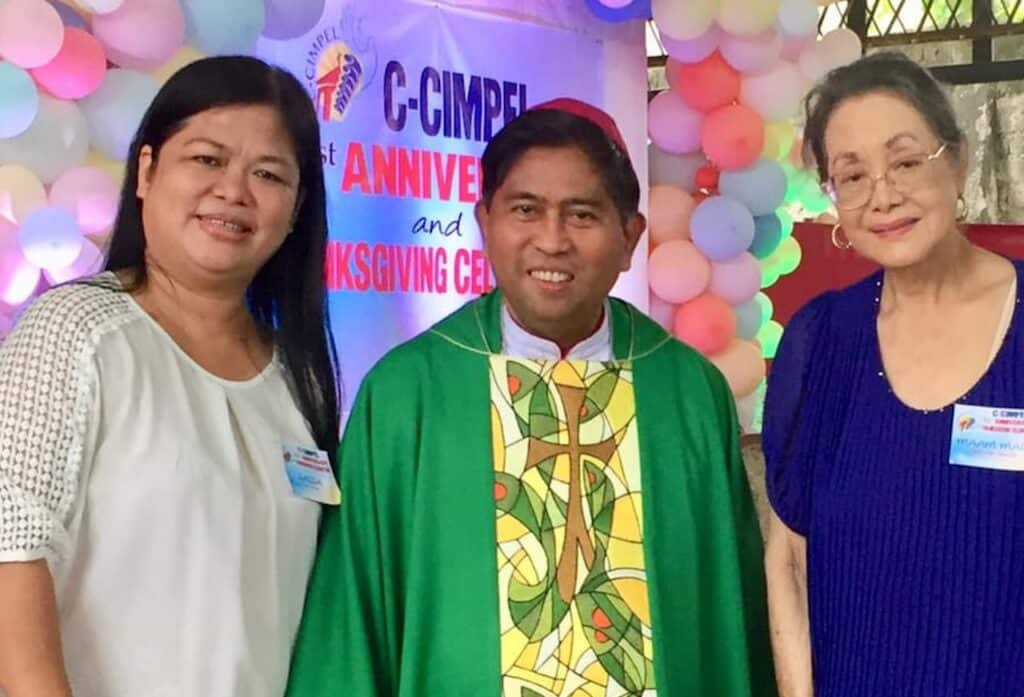
Labajo, for her part, chose hope. She instinctively proposed to the future bishop a supernatural solution:
“Let us pray over it,” she said.
READ: FACES OF CEBU: Joy Carpio, event creative, matchmaker
The priest, meanwhile, organized a procession for peaceful elections.
On election day, near the shores of Santa Fe town, Labajo’s heart rose. Past the militarized scenery and in the presence of the prelate, she learned that all the C-Cimpel volunteers had turned up, ready for action.
“We have perfect attendance,” the priest told her. “We have been granted a grace.”
“I almost cried,” she said, her dark eyes twinkling as she recalled the exhilarating moment, “and then I told him, ‘Father, give me a moment. I must call the headquarters because they have been waiting for this kind of news.’”
“Go ahead,” he said, “and call.”
Education in history, civic responsibility
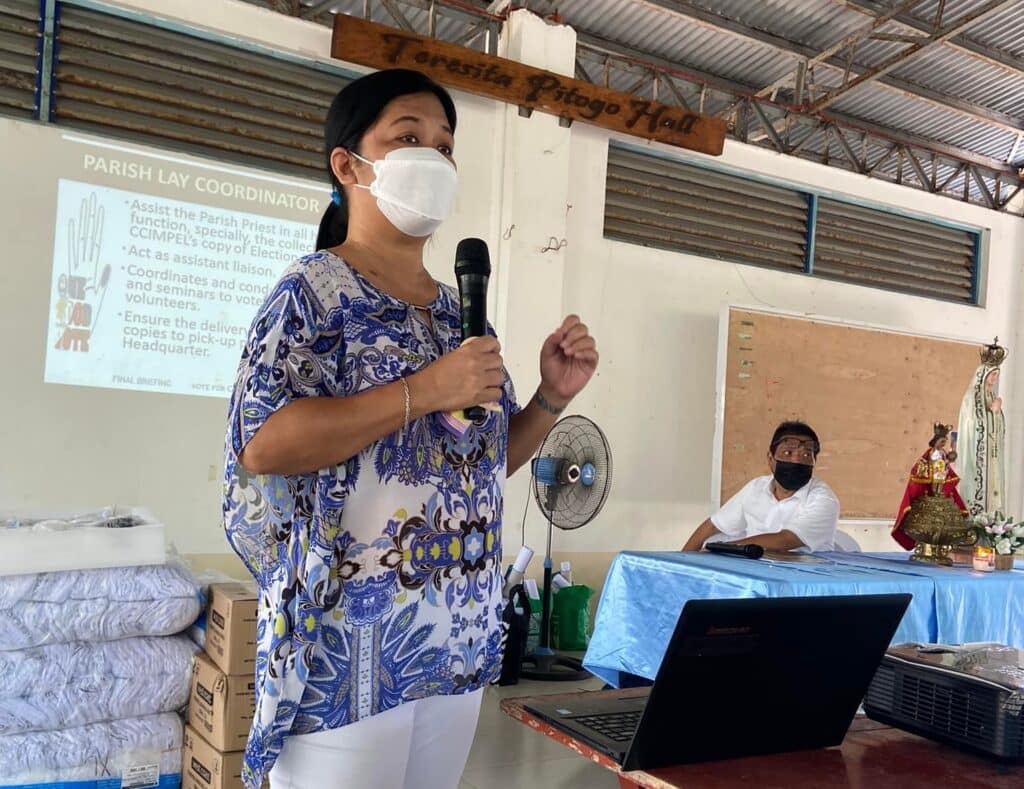
Those, who saw Labajo grow up, would not be surprised that she now serves as C-Cimpel’s assistant executive director. Her involvement with the group in the political education of citizens seems a natural outgrowth of history, her professional field.
But both her choice to specialize in history and cross the bridge that led to guardianship of democracy took root in her family and their schools.
READ: FACES OF CEBU: Aliko Garganera says Binaliw slide no ‘act of God’
“I like travel. I like knowing the stories of places,” Labajo said, explaining that she took after her father in looking to dream destinations of which tellers tell tales.
He nurtured the hope of visiting the rice terraces in Banaue. She made his hope her own as well when she realized her fascination for settings as well as characters and plots, and embraced a yearning to travel across the country and abroad.
Labajo, a native of Cebu City, eventually studied at University of San Carlos (USC) for a bachelor’s degree in education, with a major in history.
She would go on to graduate school at USC and doctoral studies at the Pontifical and Royal University of Santo Tomas, also focusing on history.
In addition, she also obtained from USC a diploma in Cebuano heritage studies, joining the program’s inaugural cohort that included author and literature professor Lilia Tio as well as eminent ecotourism consultant Joselito Costas.
But before all these, a nationwide sea change — the events up to and including the 1986 Edsa People Power Revolution with its need for far better ways of doing elections — beckoned to Labajo.
Path to C-Cimpel
In 1986, Labajo’s eldest brother, then an architecture student, shone as an example to her. He served as a volunteer for the National Movement for Free Elections’ quick count of snap election results.
“Deep inside, I thought to myself: Had I been a voter and therefore qualified, I would have volunteered,” she said, adding that she counted volunteering as part of her social responsibilities even though she knew that violence attended the exercise of the right to suffrage in these parts.
READ: Reader’s Choice: Karla P. Delgado
Around a decade later, the opportunity for her to volunteer presented itself anew.
“In 1997, I was already teaching at Colegio de la Inmaculada Concepcion,” she said. “C-Cimpel sent a letter saying that they need volunteers. When the nun read it, she gave it to me and said: ‘You’re a history teacher and I know you’re interested to volunteer.’
“My assignment was in the far north, just to monitor if the parish has organized, and shortly before the election to bring the election paraphernalia,” Labajo said. “I was a volunteer, not a member of the core group yet.”
She accepted the invitation without hesitation.
Distances did not daunt Labajo. She had realized her father’s dream of reaching the rice terraces in Banaue and Batad, taking a tricyle and walking up and down the slopes and by the cliffs of the Cordilleras to get there.
And apart from her background in history, which required a heightened capacity to understand people, she had developed confidence with the help of USC teachers including Rene Alburo, Jojin Pascual and Mimi Caballero. All of them nurtured her gift for leadership.
A year after she began volunteering, C-Cimpel invited her to be part of its core group.
Two decades of service
“Since 1998, I was assigned to Bantayan Island,” Labajo said.
“It’s an advocacy that is tiring. But when you arrive on the ground, it is fulfilling. You understand people.”
She subsequently visited the island over several election cycles until 2019, working with residents grouped according to their parishes to enable voters to vote wisely and help ensure the integrity of the ballot.
“I would stay there for five days for political education activities until after the election,” she said.
She liked life in Bantayan, having grown up with an appreciation of rural locations after many vacations with her family at San Remigio on Cebu’s northwest.
‘Ready to die’
Now and then, she brought to the island volunteers from the graduate school and from among her colleagues at USC.
But once in a while, only too aware of the heated political environment they headed toward, she would tell them, half in jest: “You must be ready to die.”
“From 1998 to 2010, Bantayan was considered a hotspot,” she said. “There I was: a woman inside a hotspot. For me, it was a challenge. But I did not fear. I did not know how to swim, but I definitely enjoyed riding the little ferries, even the small fishing boats from the mainland Bantayan to Doong, which has a parish. I loved going there though the situation was precarious.
“Our first stop used to be Bantayan proper. After 2002, its situation improved. But matters worsened in Madridejos town. People became so polarized. They would even accuse C-Cimpel of having a political color. For many years, I needed to bring a special team to collect election returns from Madridejos because residents there would even accuse church workers such as parish priests of partisanship.
“Politicians still found it fashionable to recruit goons, we continued to count votes manually, and we did not get any sleep. It was very challenging.”
Securing the future
In time, the political discord in Bantayan subsided and it has been years, Labajo said, since the Comelec placed any town on the island under their control.
But the passing of time has brought with it new challenges for C-Cimpel and its work of educating voters and strengthening democracy in and from Cebu.
The acceleration of digital technology has led to a rise in political polarization. The years of the Covid pandemic lessened the frequency of the group’s formation programs. The results of elections in 2022 seemed to call C-Cimpel’s work into question. Subsequent exposes about the extent of corruption in the country turning out to be a demand for the group to participate in efforts to promote integrity across society. Meanwhile, the founding leaders and volunteers of C-Cimpel have been getting on in years.
This last development prompted the core group to arrange for changes in its operations. While the elderly Maria Luisa Chiongbian remained the executive director, they agreed for Labajo to be at the helm of operations starting from 2025.
Chiongbian, Labajo and the core group, which includes, among others, Louella Alix and Gloria Cuico, aim to further ensure the continuity of C-Cimpel.
“We are not getting any younger,” Labajo said, explaining why C-Cimpel presently prioritizes passing the baton.
They have been assembling volunteer teams with coordinators in each of their 10 districts. (A C-Cimpel district corresponds to the eight districts of the Archdiocese of Cebu plus Bantayan and Camotes islands).
Confronting corruption, new energy
For Labajo, and the core group, corruption is the most pressing issue facing Filipino citizens today.
This is the reason they will delve into their next formation for district leaders, which takes place on March 7, 2026.
Labajo will speak about the history of corruption while retired judge Gabriel Ingles will speak about its anatomy.
The formation session will close, as all C-Cimpel educational activities do, with theological reflection. But the educational activity, she said, will not be the last. C-Cimpel also eyes further formation activities in relation to politics and economics for their district leaders, whom they expect to echo what they learn to in the vicariates and parishes of the archdiocese.
This fresh burst of activity, comes like a second wind, as it were, for Labajo. The 2022 campaign and election cycle, she said, had left her depleted.
She had seen otherwise intelligent professionals becoming apologists for distorted historical narratives, trolls and fake news on the internet causing driving the deterioration of public conversations, results that did not seem to reflect the enlightened vote for which C-Cimpel had always aimed.
In her disappointment, she thought the time had come to give up teaching history and volunteering for C-Cimpel.
Life, however, had other plans for her.
Even though she had privately vowed to no longer speak about elections, her students raised the subject, and sought her views.
The curiosity of the young worked on Labajo feels like a soft breeze that saves dying embers, and now, past the midterm mark since the last general elections, the longtime teacher and volunteer continues to spread the fire of love of country.