



Cebu urged to teach basic solid waste management in schools
Call is made amid garbage crisis Cebu City and other Metro Cebu cities face today
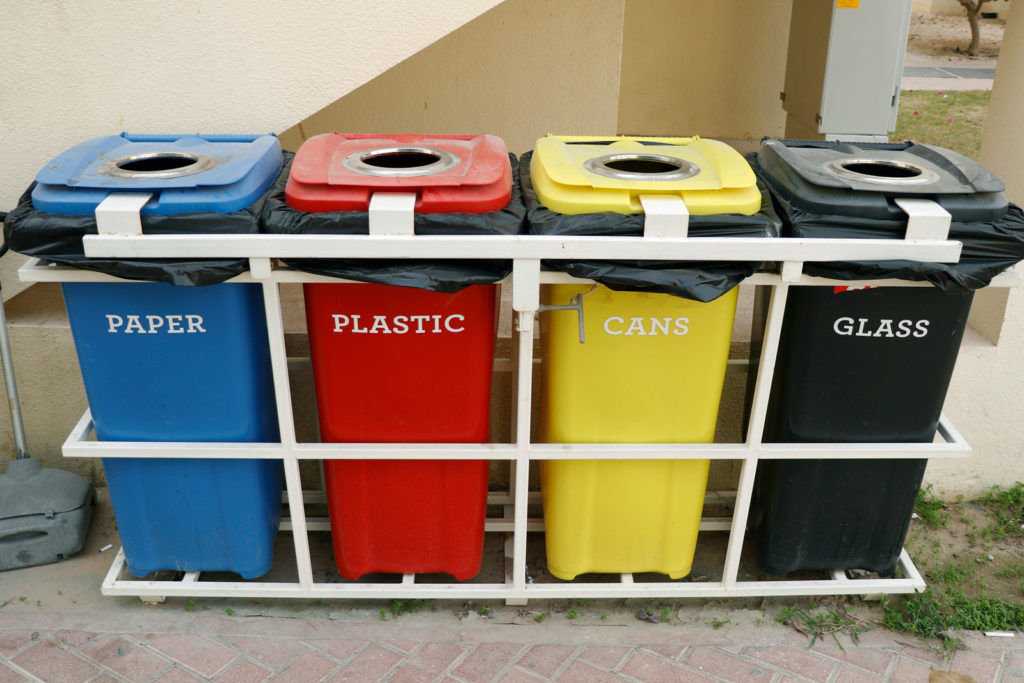
CEBU CITY, Philippines — A city councilor is pushing for a long-term fix that begins not in landfills or power plants, but inside classrooms, as Cebu City struggles to contain a deepening garbage crisis.
In a privilege speech delivered on Tuesday, January 27, Councilor Joel Garganera, chair of the City Council’s Committee on Environment and Energy, urged the Department of Education (DepEd), the Local School Board, and higher education agencies to integrate basic solid waste management into school curricula across all levels.
While waste segregation and recycling have long been introduced in classrooms, Garganera argued that true sustainable waste solutions depend on instilling behavioral change from an early age, equipping students with practical knowledge to reduce landfill reliance and promote circular economy principles.
READ: Archival: Inayawan site a transfer station, not a reopened landfill
The proposal comes as the city reels from the collapse of the Binaliw landfill and scrambles for short-term disposal options, with Garganera describing Cebu City’s chronic dependence on landfills and its failure to institutionalize waste discipline at the household level.
Learning from Yokohama
Garganera anchored his call on lessons drawn from a recent waste management training in Yokohama, Japan, where he joined officials from the Cebu City Environment and Natural Resources Office (CCENRO) and the City Planning and Development Office (CPDO).
Yokohama’s system, he said, begins with strict household waste segregation reinforced through education starting as early as nursery school. Recyclables, non-combustibles, and combustibles were processed through separate facilities, with residual waste treated in modern incineration or waste-to-energy (WTE) plants.
“Yokohama’s experience mirrors Cebu City’s past,” Garganera said.
READ: Cebu faces waste crisis after fatal landfill slide
He noted that the Japanese city once struggled with poor segregation, landfill reliance, and public resistance to incineration. Over time, education and consistent policy enforcement helped normalize proper waste practices.
Today, Garganera said, Yokohama operates four WTE facilities—down from seven—because recycling and segregation improved, significantly reducing landfill dependence in a city with limited land area.
Landfills and their long shadows
Garganera contrasted this with Cebu City’s current trajectory, warning that landfills, often seen as quick fixes, carry lasting environmental risks.
He cited the Shinmeidai Landfill in Yokohama, which closed in 2017 but remains under rehabilitation, with leachate still undergoing treatment years later. Closer to home, the Binaliw landfill tragedy, he said, should have been a wake-up call.
READ: Mandaue garbage transfer station yields temporary livelihood in recyclables
The city now plans to use the long-closed Inayawan landfill as a temporary transfer station, a move Garganera questioned by invoking Section 25 of Republic Act 9003, which prohibits waste storage at transfer stations beyond 24 hours.
“It is deeply unfortunate that we closed one landfill only to consider reopening another that was never rehabilitated,” he said.
Reopening the WTE debate
Garganera also urged the city to revisit waste-to-energy as a complementary—not competing—solution to waste reduction, recycling, and segregation.
He recalled a previously stalled joint venture between Cebu City and New Sky Energy Philippines Inc. for a large-scale WTE facility, which failed amid what he described as weak local government support, despite technical reviews and public hearings involving national agencies.
Read also: Cebu City not against waste-to-energy solution, says Archival
National policy, he stressed, has since evolved. The Department of Energy has included WTE in the Philippine Energy Plan 2023–2050 and issued a 2025 circular integrating WTE into the country’s power generation mix.
The Department of Environment and Natural Resources, meanwhile, has had guidelines for WTE facilities in municipal solid waste management since 2019.
“These issuances show national government openness to WTE,” Garganera said, countering claims that regulations remain unclear.
City Hall’s position
Mayor Nestor Archival has said he was not closing the door on WTE, but remains cautious, citing health, environmental, and regulatory concerns.
“If there is WTE technology, give us the directions,” Archival said in a recent press conference. “If that is one of the solutions, then we want it.”
For now, the city is banking on waste reduction measures, composting, and temporary hauling arrangements, as it transports about 600 tons of garbage daily to a private landfill in Consolacion—an agreement set to end on February 11. Nearby cities Talisay and Minglanilla have already refused to accept Cebu City’s waste.
Education as the starting point
Amid these uncertainties, Garganera said institutionalizing waste education may offer the most durable solution.
He moved to formally urge DepEd, the Local School Board, the Department of Social Welfare Services, and the Commission on Higher Education to embed basic solid waste management concepts—segregation, recycling, and waste reduction—into formal curricula.
“Not everyone is mindful of where their garbage ends up,” he said. “That is precisely why education must start early.”
Disclaimer: The comments uploaded on this site do not necessarily represent or reflect the views of management and owner of Cebudailynews. We reserve the right to exclude comments that we deem to be inconsistent with our editorial standards.
