



CCDRRMC: Cebu needs a flood-control plan after floods
This, despite Cebu logged 414 flood-control projects from 2019 to 2023
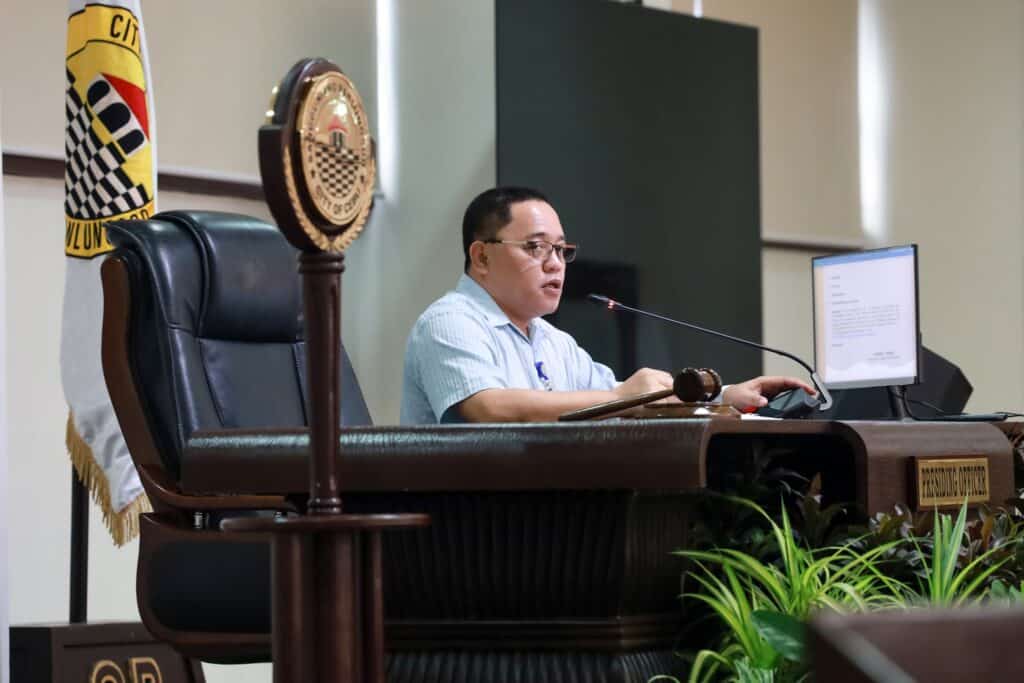
Cebu City Councilor Dave Tumulak, chairman of the Cebu City Disaster Risk Reduction and Management Council (CCDRRMC). | Sangguniang Panlungsod Cebu City – Secretariat
CEBU CITY, Philippines — Cebu has the second-highest number of flood-control projects in the country, but the province continues to reel from waist-deep floods after even brief downpours.
This prompted disaster officials to press for a comprehensive flood-control plan.
Councilor Dave Tumulak, chairman of the Cebu City Disaster Risk Reduction and Management Council (CCDRRMC), said on Saturday, August 16, that knee-to-neck-deep floods paralyzed traffic, damaged homes, and displaced hundreds of families.
READ: Cebu among provinces with most flood control projects
“Dredging the river to increase its carrying capacity is strongly recommended to manage anticipated increases in riverine water volume and reduce flood risk downstream,” Tumulak said in his assessment report.
While drainage systems in upland barangays functioned and directed rainwater toward rivers, he noted that waterways lacked the capacity to handle the surge.
READ: DPWH completes 87 flood control projects worth ₱7.3B in Cebu
Tumulak stressed that Cebu City can no longer rely on fragmented interventions and must pursue a comprehensive flood-control strategy combining infrastructure works, environmental enforcement, and community resilience.
Among his recommendations were river widening and dredging, desilting of drainage networks, widening of chokepoints and culverts, installation of debris screens, improved waste management, stricter land-use planning, and stronger flood forecasting and evacuation systems.
Floods paralyze Metro Cebu
The deluge on Friday night inundated riverside communities and major roads. In Barangay Pit-os, the Department of Social Welfare and Services reported one family lost its home, while 85 families in Pahina Central’s Riverside area and 149 families in Tumoy were forced to evacuate.
Traffic ground to a halt when waist-deep floods swamped the Mandaue approach of the Marcelo Fernan Bridge around 1:45 a.m. Vehicles were diverted to the old Mandaue-Mactan Bridge until the Fernan reopened two hours later, according to the Lapu-Lapu City Disaster Risk Reduction and Management Office.
Strong river currents swept away a taxi and a multicab in Barangay Paknaan, while landslides and fallen trees blocked roads in Busay. Flooding also hit Brgys. Sapangdaku and Guadalupe.
The Philippine Atmospheric, Geophysical and Astronomical Services Administration (PAGASA) said the rains were triggered by the trough of a low-pressure area enhanced by the southwest monsoon. More scattered rains and thunderstorms are expected over the weekend.
Cebu ranks 2nd in flood projects
The disaster struck just days after Malacañang, through its Sumbong sa Pangulo portal, revealed that Cebu had 414 flood control projects, second only to Bulacan.
Despite this, Cebu is not officially listed among the country’s most flood-prone provinces, according to the Presidential Communications Office (PCO).
President Ferdinand Marcos Jr. ordered the Department of Public Works and Highways (DPWH) to release the list of projects following his State of the Nation Address to identify unfinished or “ghost” projects. The online portal allows citizens to monitor and report the status of infrastructure projects in their communities.
The DPWH Sixth Engineering District reported implementing 87 flood control projects worth P7.3 billion between 2022 and 2025 across Mandaue, Lapu-Lapu, Consolacion, and Cordova.
District Engineer Gumer Castillo said many works targeted chokepoints such as the Butuanon River and Mahiga Creek, adding that all projects were monitored, with some still ongoing or suspended pending clearances.
Mandaue City has also rolled out its own initiatives under its Drainage Master Plan, aligned with DPWH’s Metro Cebu Drainage Plan.
Architect Marlo Ocleasa, city planning chief, said coordination with Cebu City is critical since 60 percent of Mandaue’s floodwaters originate from Cebu City’s upland barangays.
“This will still take quite some time because it’s a problem from 20, 30 years ago, and we are solving it now,” Ocleasa said.
Disclaimer: The comments uploaded on this site do not necessarily represent or reflect the views of management and owner of Cebudailynews. We reserve the right to exclude comments that we deem to be inconsistent with our editorial standards.
